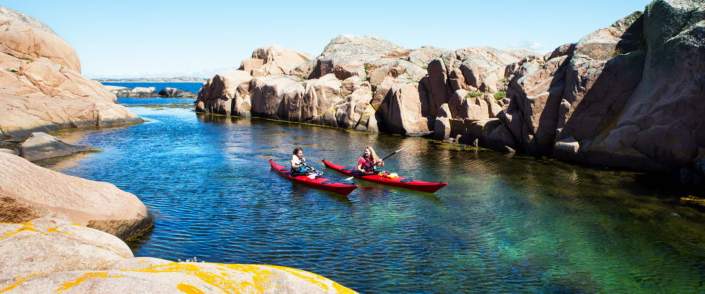
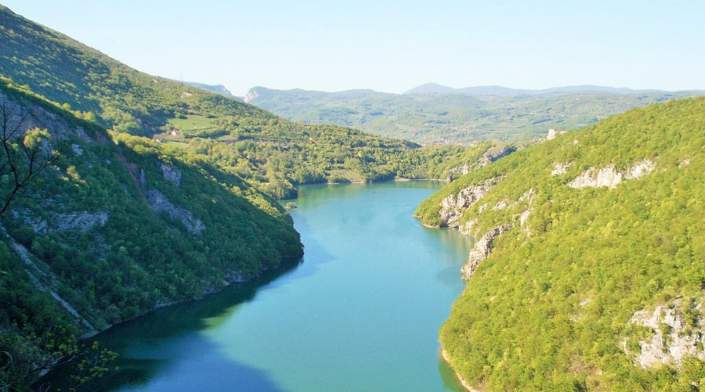
The Novohrad-Nógrád Geopark was established in 2008, after more than a decade of professional preparatory work. The initiative, which aims at the preservation of the common geological heritage and the promotion of nature-based tourism, was launched by the Bükk National Park and the Cerová vrchovina CHKO (Cerová vrchovina CHKO), but the Municipality of Fiľakovo, the Salgótarján Small Area Association and the Nógrád Geopark Association also played an important role.
In 2010, UNESCO included the initiative in the European and Global Geoparks Network as the world’s first cross-border geopark. However, the geopark title is owned separately by a Hungarian company (Nógrádi Geopark Nkft., based in Salgótarján, later Novohrad-Nógrád Nonprofit Ltd.) and a Slovakian civil association (Združenie právnických osôb Geopark Novohrad-Nógrád, based in Fülek/Fiľakovo), which makes the cross-border integrated development of the geopark, covering 68 settlements in Hungary and 24 in Slovakia, difficult. The Bükk National Park could not be a member of the Hungarian organisation, as the institution cannot be a member of a company or an association. The only legal form in which they can participate is the EGTC. This would be important because the national park is the manager of the geological heritage located in the Hungarian territory of the geopark. During the 4-yearly UNESCO audit, the delegation also criticised the fact that BNPI cannot participate in the joint work. The main challenge for the non-profit association set up on the Slovak side is to raise funds. European and global membership requires participation in the international events of the two networks, which sometimes means travelling to distant continents, and the association cannot cover the costs.
Furthermore, the current structure is very complex, difficult to understand and involves a large number of duplications, while the membership composition is not optimal from a management point of view.
The solution to the above problems is a joint cross-border management organisation, for which the EU EGTC Regulation can provide the framework. Such an association was already established in the region in 2011, with the membership of the municipalities of Fiľakovo and Salgótarján, the Novohrad-Nógrád EGTC, based in Salgótarján, which, however, almost exclusively implemented developments on the Hungarian side, then went bankrupt after the 2015 municipal elections and was liquidated in 2018. In the meantime, however, UNESCO itself has found the legal solution suitable for the governance of European cross-border geoparks and has included it in its recommendations, and two such geoparks are now managed by EGTCs.