Mutual recognition of the diagnosis of children with special educational needs (SNI), training and sensitisation of teachers

The essence of the cross-border obstacle

In both Hungary and Slovakia, the number of children with special educational needs (SNI) is increasing year on year. Special educational needs is an umbrella term that gives additional rights to children and pupils with special needs. Eligibility is determined by a committee of experts and is categorised as: musculoskeletal, sensory, intellectual, speech impaired, or cumulatively handicapped. Although educational establishments have different structures for dealing with children with special educational needs, the methods used to diagnose them (e.g. DSM-V) are in line with international and EU classifications. Diagnostic decisions should be mutually recognized or partially accepted in order to speed up the examination process and reduce waiting times for families moving across borders.

Diagnosis decisions could therefore be mutually recognised or partially accepted by applying the US nomenclature, in order to speed up the process of examination and shorten the waiting time for affected families moving across the border.

In the case of a child with a foreign nationality, the Hungarian public education system will re-examine the child, even if he or she has a foreign code. This is justified because the educational institution for the child is designated by the specialised services. According to the law assigned to the counties, the county commissions must designate the institution for all children with SNI and at the same time specify what kind of development they will receive in the educational institution, as well as what kind of facilities they may receive (permission to use equipment/calculator, exemption from subjects, etc.). However, because of the internationally recognised classification code, the assessment could be much shorter and simpler.

Briefing of the situation

Teacher training is different in the two countries: while in Slovakia the inclusion system requires teachers to be prepared to deal with children with SNI, in Hungary this preparation/training is voluntary and optional.

In Hungary, the specialised pedagogical service prepares an expert opinion on the basis of a complex psychological, pedagogical-educational and, if necessary, medical examination of the child or pupil, and, in the case of suspected special educational needs, a complex psychological, pedagogical-educational and medical examination. The assessment is carried out ex officio at the request of the parent or educational establishment. The expert committee examines the eligibility for early intervention and care; the difficulties of integration, learning and behaviour; and the special educational needs (motor, sensory, intellectual, speech or language impairment, cumulative disability, autism spectrum disorder or other mental disorder: severe learning, attention or behavioural disability). 

On the basis of the list of institutions involved in the care of children with special educational needs, the expert committee informs the parents about the institutions and possibilities where the child can receive developmental education and where the child can fulfil his/her compulsory schooling.

In Hungary and Slovakia, the pedagogical services carrying out the investigation would very much welcome any approximation and practice that would allow to reduce the increased caseload and workload, and the waiting time. The Hungarian State Secretary for Education replied that the expert opinion and the recognition of foreign diagnoses exist at the level of public education, vocational training and higher education. 

History of the topic

The Secretary of State for Public Education has been contacted, and in his reply he did not rule out recognition for foreign nationals, referring to the legal background.

Specialised pedagogical services operating in Hungary are typically provided for Hungarian citizens residing in Hungary, but according to Article 92 (3) of Act CXC of 2011 years on National Public Education, non-Hungarian citizens residing in Hungary may use specialised pedagogical services on the same conditions as Hungarian citizens if:

  1. refugee, protected person, asylum seeker, and person with a status of a person admitted pursuant to Section 25/B (1) (b) of Paragraph (1) of Act LXXX of 2007 on Asylum,
  2. exercises the right of free movement and residence in Hungary under the Act on the Entry and Residence of Persons with the Right of Free Movement and Residence,
  3. on the general conditions of entry and residence of third-country nationals

is subject to the Act on Rules and Regulations and has the right of permanent residence, or

has a permit to reside in Hungary.

However, the legislation is not explicit about the procedure to be followed by the specialised pedagogical service, but it is permissive.

Article 45/B of the Decree also provides that if the child, pupil or applicant has a document issued abroad in a certified Hungarian translation certifying special educational needs or disabilities under Hungarian law, the expert committee may prepare its expert opinion on the special educational needs or disabilities indicated by the foreign document without a special examination.

Regarding joint training, training material for teachers on the training of children with SNI is available at the Hungarian level of the school district, but is not yet mandatory. A methodology developed in the framework of a joint project could help teachers in the border region to learn about integrated education techniques and to exchange experiences.
Identified good examples

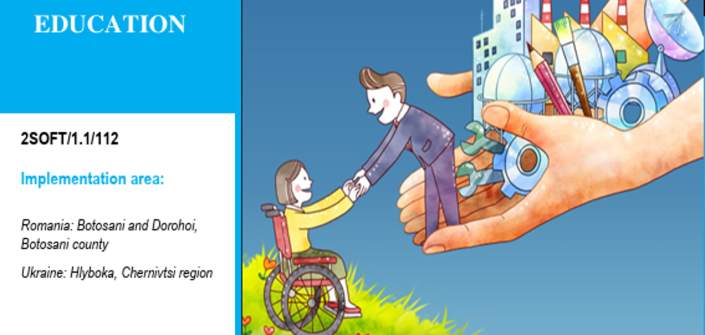
ENI CBC 201- 2020 Romania – Republic of Moldova: Together for better educational inclusion of children with special educational needs. The aim of the project is to ensure access to quality education for children with special educational needs from both countries by establishing a cross-border education network between the Botoșani County and the Bălți district. Accordingly, 10 teachers were trained to facilitate the training of 200 teachers of different subjects from 10 different schools in Botoșani and Bălți.

Preliminary objectives

Hungarian law does not currently regulate what to do when a child arrives from abroad. It would help the work of overburdened specialist services if the mutual recognition of international/EU codes and decisions were enshrined in law, and could also save families considerable time in the case of long waiting lists. The development of a practice (even a common part of a decision) that facilitates the work of the specialised pedagogical service on a daily basis is necessary.

Currently, teachers in both countries do not have specific knowledge about the education of children with SNI. 

A joint training programme could provide specific methods to help children with SNI to catch up in an integrated environment where the developmental pace of other children can be maintained. 

At present, the internationally used diagnostic system can provide interoperability between SNI classifications when assessing children with special educational needs. The complex diagnostic activity is carried out by the specialised services with basic reference to the DSM, BNO and FNO.

The convergence of the content of the expert opinions will greatly facilitate the work of the pedagogical services. In Hungary, the content of the expert opinion:

  • personal data,
  • a description of the professional examination (facts supporting the learning disability, the need for development and related professional tasks provided by the designated educational institution, the framework for school or individual instruction, specific requirements, development tasks and their time frame, conditions for exemptions).

It would reduce the workload of the experts and the waiting time for the child/parents, so that the child would get sooner to a suitable institution in the neighbouring country.

Related news

No posts found.

Related best practices

TransFoVAAL

TransFoVAAL

Between 2017 and 2020, the TransFoVAAL project sought to integrate the agri-food training systems along the French-Italian border. The investment ...
EduForest PYREMPFOR

EduForest PYREMPFOR

The Spanish-French PYREMPFOR project, implemented between 2016 and 2019, aims to promote the forestry profession across borders ...
BLUE KEP

BLUE KEP

The BLUE KEP project was implemented between 2018 and 2019 in Croatia and Italy. Building on the results of an ...
PERFORM

PERFORM

The PERFORM project was implemented from 2018 to 2021, funded by the Interreg V-A Latvia - Lithuania CBC Programme 2014-2020 ...
BEDUN

BEDUN

The BEDUN project, implemented from 2020 to 2023, aims to develop educational services and activities for the development of children ...
TOGETHER FOR A BETTER EDUCATIONAL INTEGRATION OF CHILDREN WITH SPECIAL EDUCATIONAL NEEDS

TOGETHER FOR A BETTER EDUCATIONAL INTEGRATION OF CHILDREN WITH SPECIAL EDUCATIONAL NEEDS

Within the Romania - Moldova ENPI programme 2014-2020, a specific project promoted inclusive education for children with SEN. The activities ...
SENSATIONALSTEM

SENSATIONALSTEM

The SENSationalSTEM project, implemented in the framework of the Interreg Central Baltic 2014-2020 programme, helps students with special educational needs ...
BREAKING BARRIERS

BREAKING BARRIERS

The development of a common educational method to create inclusive education and to take into account the needs of children ...