The impact of telephone service providers’ misinformation practices on the free market

The essence of the cross-border obstacle

According to the information received from Slovak commuters, these employees are unable to purchase prepaid SlM cards in the shops of larger service providers, as customer service staff require presentation of a Hungarian official document for the purchase. The obstacle is primarily of a market nature. The condition for subscribing to a mobile phone service is the presentation of an identity document (identity card, temporary identity card, passport, driving license) and an official document proving the address. A subscription contract can only be concluded with a person who is over 18 years of age and not under guardianship. In the case of a subscription, the above documents are therefore necessary to ensure payment of the monthly fee. The situation is different with prepaid SIM telephone numbers, since the user pays for the service in advance.

In connection with this case, it was necessary to examine to what extent the business policy of telephone companies is discriminatory from the point of view of European integration and the single market rules ensuring the free flow of services.

Briefing of the situation

Pursuant to Section 25 (1) of Act C of 2003 on Electronic Communications (hereinafter referred to as the Electronic Communications Act), in connection with the tasks and powers of the Authority specified in this Act, in the event of a significant circumstance giving rise to the establishment or review of an obligation relating to a service provider with significant market power, anyone who does not qualify as a customer for the purpose of the notification or would not qualify as a customer under the law may file a report with the Authority. Pursuant to Section 25 (2) of the Electronic Communications Act, the report must state the name and address of the reporting party, the circumstance giving rise to the Authority’s proceedings, or the activity or conduct on the basis of which a violation of the electronic communications rule is likely, and the facts establishing the report. Pursuant to Section 25 (3) of the Electronic Communications Act, the Authority may, at its discretion, initiate proceedings ex officio on the basis of the report. If the Authority does not initiate proceedings based on the notification, it shall inform the notifier thereof – without any obligation to provide reasons.

The Authority’s competence is based on Section 10(1)(13) of the Electronic Communications Act as per Section 10(2). During the general regulatory supervision procedure, the Authority shall examine whether the service provider’s conduct complies with the rules applicable to electronic communications: i.e. the Electronic Communications Act and its implementing regulations, the Authority’s resolution and the service provider’s General Terms and Conditions.

In our report to the National Media and Communications Authority, we requested the Authority to enforce the possibility for foreign citizens to purchase SlM cards.

In connection with the report, the Authority contacted the service providers concerned, called on them to examine their practices and take all necessary steps to ensure that their Customer Service staff act appropriately in the cases described in the complaint and similar cases. The Authority also requested that the service providers report on the measures taken.

History of the topic

Despite repeated telephone inquiries and complaints, the customer services of major service providers such as One Hungary Zrt. (formerly Vodafone), Telekom Hungary Plc., Yettel Hungary Zrt. informed CESCI that it was not possible for foreign EU citizens to purchase SIM cards in stores. During further telephone calls, we attempted to reach the management level above the customer services. In this case, we were informed that the internal regulations of the service providers allow EU and EEA citizens to purchase prepaid SIM cards with a valid photo ID. This information did not reach the customer service staff, so the regulated practice did not apply in the business premises. CESCI contacted the Office of the National Media and Communications Authority on August 22, 2024. Based on the information in the report, the Authority determined that no circumstances indicating a violation of the rules on electronic communications had arisen. Apart from the measures taken by the service providers, the Authority did not initiate proceedings based on the report.

Identified good examples

A good example in Germany is that if a foreign citizen wants to request a SIM card, they have the opportunity to buy a Prepaid SIM card at most commercial establishments (shops, gas stations, newsagents, etc.). The condition is that an address, date of birth and a photo ID must be provided for identification. After a video identification process, the user can top up the card and use it up to the amount loaded.

Preliminary objectives

During the investigation of the problem, the service providers did not find any errors or deficiencies that would indicate a system-level problem, so all service providers concluded that the case reported to them could have resulted from an individual administrative error or a series of errors. In response to the Authority’s inquiry, they confirmed that foreigners without a Hungarian identity card can also conclude a prepaid card subscription contract, but in doing so, the legal requirements regarding data reconciliation must be complied with. Therefore, such persons can only conclude a contract in person, and the service providers have the appropriate procedures in place in this regard. In order to ensure that the relevant requirements are fully implemented in service provider practice, the service providers have taken effective steps to enforce their rules in accordance with the law, with information sent to customer service staff, with control questions related to the problem built into knowledge checks, and with training built into their knowledge refresher training programs.

Related news

No posts found.

Related best practices

PANNONIA GOURMET - EATPANNONIA

PANNONIA GOURMET – EATPANNONIA

In order to promote the gastronomic treasures of the Serbian-Croatian border region, the Pannonia Gourmet project was created, and as ...
INTERNOVAMARKET_FOOD

INTERNOVAMARKET_FOOD

The INTERNOVAMARKET_FOOD project was implemented between 2015 and 2020, in the framework of the Spanish-Portuguese Interreg programme 2014-2020. The initiative ...
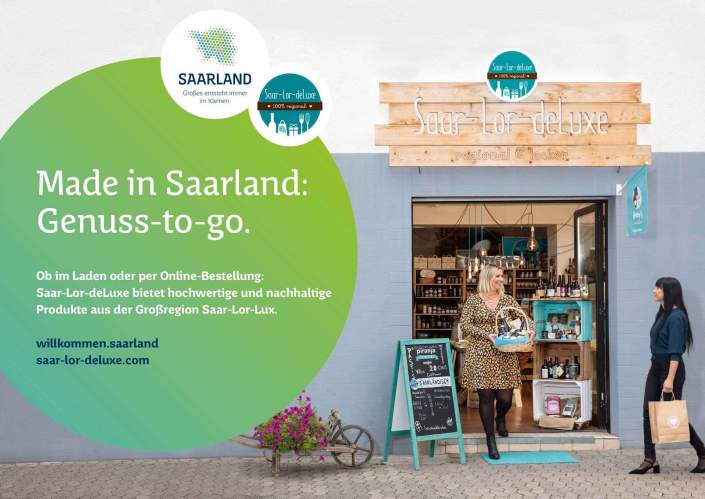
SAAR-LOR-DELUXE

SAAR-LOR-DELUXE

Saar-Lor-Lux brings together local producers and products from the Saar-Lor-Lux region (Saarland, Lorraine, Luxembourg and Rhineland-Palatinate). The shop in Saarbrücken ...
TR3S LOCAL

TR3S LOCAL

The Tr3s local project, which supports the production and marketing of local products in rural areas, was implemented during the ...
LOCAL FOOD

LOCAL FOOD

The unemployment and low income in the eastern part of the Latvian-Lithuanian border have made it necessary to promote the ...
FOOD AND WINE MARKET PLACE

FOOD AND WINE MARKET PLACE

The F&W Market Place project was implemented in the framework of the Interreg Maritime Programme 2014-2020, in cooperation with Italian ...

In the initial phase of the #ACCESS project, which aims to identify obstacles, CESCI has, among other forums, collected and is collecting information on administrative and legal obstacles encountered by cross-border residents through a Helpdesk service.

The lack of information and insufficient information in the border region (made more difficult by bilingualism) is linked to the case of Slovak commuters who cannot apply for a Hungarian telephone number or SIM card from service providers because they do not have a Hungarian address. Our project investigated the extent to which the business policies of telephone companies are discriminatory in terms of European integration and the single market rules ensuring the free movement of services.

CESCI contacted both the telephone operators and the National Media and Infocommunications Authority, who were cooperative in identifying the problem.

  • The enquiries revealed that while it is true that subscriptions to mobile telephony services require the presentation of an identification document and an official proof of address, the situation is different when it comes to the application for a top-up SIM card. The internal rules of the service providers include a requirement for EU and EEA citizens to be in possession of a valid photo ID to buy a top-up SIM card.

  • In the cases investigated, this information was not passed on to the customer service staff, so that the regulated practice could not be enforced in the shops. The service providers did not find any errors or deficiencies during the investigation of the problem that would indicate a systemic problem, and all service providers concluded that the incident reported to them could have been the result of an individual error or a series of errors by the administrator.

  • In order to ensure that their practices are fully compliant, service providers have taken effective steps to enforce their rules in accordance with the legislation by sending information notes to their customer service staff, by including follow-up questions on the problem in their knowledge checks and by providing training in their knowledge update training programmes.

In addition to the measures taken by the service providers, the National Media and Infocommunications Authority has not taken initiated proceedings. In the framework of the #ACCESS project, CESCI is paying particular attention to improving the flow of information on economic and social developments in the border region.