Supporting the cross-border marketing of local agricultural products and bringing the relevant national regulatory environments closer together

The essence of the cross-border obstacle

Nowadays, more and more people buy from local producers in the Member States, but local producers can only sell across the border in very complicated and expensive ways, mainly because of the measures taken by the Member States to protect their own agricultural producers. The development of short cross-border supply chains and the inclusion of local products from across the border in mass catering is not yet possible, even though it could be physically developed in many cross-border functional catchment areas.

At present, the legislative environment at national level leaves a rather limited space for cross-border sales of local products: they must either be produced on an operational basis or sold locally to customers (in which case the customer crosses the border, not the producer), or an intermediate sales organisation must be established which then resells the product to third parties (including cross-border customers). The main reason for this is that traceability and quality assurance are not ensured across borders, only in case of plant size.

Briefing of the situation

In Hungary, the strengthening of the economic role of families is supported by the relevant legislation, as the backbone of agricultural production is determined by the form of production based on family farms. The production activity carried out in a cross-generational framework is able to ensure the permanence and growth of the countryside on a lasting basis, while at the same time ensuring the preservation of the diversity of agriculture and strengthening its adaptability in the long term. The production of local products in small quantities, i.e. for marginal and local sales, is permitted by EU law and supported by lighter hygiene rules. In particular, it allows the continued use of traditional methods at any stage of production, processing or distribution of foodstuffs and in relation to the requirements of the establishments necessary for them.

For small quantities of basic products, it is up to the Member State to decide whether to apply the general EU rules for food business operators to these products, or to establish food safety and hygiene rules on the basis of a possible “exception” at national level. In order to support traditions rooted in Hungarian culture, the Hungarian legislator adopted Decree No 52/2010 on the conditions of small-scale food production and sale. (IV. 30.) FVM decided in favour of the ‘exception’ by adopting a decree, given that the primary priority at the time was to ensure the widest possible distribution of local products within the country.

In Hungary, small producers supply small-scale food to the final consumer:

  •       in the place of their farm,
  •       local farmers’ market, market, fair, occasional event and authorised temporary sales point operating in the territory of Hungary,
  •       by mail order, with the exception of foodstuffs requiring refrigeration,
  •       a delivery point and a vending machine, and
  •       retail and catering establishments.

If the small producer is a natural person, the production and sale of small producer food

  •     the small producer,
  •     a relative of the small producer,
  •     a person living in the same household as the small producer, and
  •     may be carried out by an employee of the small producer.

In Slovakia, the conditions for processing own basic products into small quantities are regulated by a government decree, which lays down the health requirements for the sale of small quantities of basic products of plant and animal origin, milk and milk products to the final consumer and retail institutions. The addendum to the Decree allows the processing of small quantities of own products in own premises which are not officially approved units, but which must comply with health regulations.

The range of people who can work with this:

  • a natural person, if he or she complies with tax regulations, in which case he or she does not have to become an entrepreneur,
  • an entrepreneur, an individual private farmer, who is obliged to register his business with the local government with territorial competence,
  • primary producers and artisans and other persons who, in addition to plant and animal production, carry out other activities that qualify as private undertakings and are defined in the Act on private entrepreneurs,
  • it may be made up of farmers who, in addition to individual private management, also form a public limited company, become legal persons and are thus subject to the rules applicable to commercial companies.

Each group is subject to different regulations regarding formation, documents required for the formation of the given company, tax and reporting obligations.

The sale can take place according to the rules on small-volume sales:

  • directly at home/at the place of own holding,
  • in the market,
  • in a retail establishment
  • in a webshop.

In Hungary, good cooperation has been established with the Ministry of Agriculture’s area responsible for food safety. The findings of CESCI’s previous second legal accessibility project were partially taken into account in the report 60/2023. (XI. 15.) of the Minister for Agriculture on the hygiene conditions of small-scale, local and marginal food production and sale and their facilitation, helping domestic small-scale producers and ‘small-scale’ food producers. In addition to the expansion of the quantitative limits of the basic product and the products produced from it, the sales opportunity was expanded by home delivery, the use of a parcel delivery point or an automatic machine. The new option represents an approximation in the regulations of the two countries.

Relevant authorities on the Hungarian side:

  • Department of Food Chain Supervision, Ministry of Agriculture,
  • Department of International Relations, Ministry of Agriculture,
  • Department of Cooperation in the Carpathian Basin, Ministry of Agriculture,
  • National Food Chain Safety Office (NFCSO).

Online product sales are also supported in Slovakia for local products that comply with food safety requirements. You can also sell Hungarian products online in Slovakia, but you have to comply with Slovak e-commerce legislation, and if sales exceed the relevant threshold, you need to register for VAT in Slovakia.

Relevant authorities on the Slovak side:

  • State Veterinary and Food Office of the Slovak Republic
  • Regional Veterinary and Food Office (registration is possible here if company, appropriate labelling, food safety and quality)

History of the topic

Personal consultations also took place in connection with the previous legal accessibility study of CESCI, and within the framework of the #ACCESS project good relations were established with the Hungarian and Slovak agricultural chambers during the interviews. We also contacted the Small Scale Association, which works for small farmers, family farms, agritourism service providers and local food systems, short supply chains (REL).

Identified good examples

The Gorizia Vegetable Gardens programme was implemented in the twin towns of Gorizia/Gorica financed by the European Union and the Slovenian State in cooperation with the local rural development agency in northern Primoska and the Federation of National Cooperatives of Friuli – Venezia Giulia. A virtual marketplace has been created, where the delivery point for online orders is located in Sant’ Andrea (Štandrež), Italy. Their plans include home delivery of fruits and vegetables. The main aspect of the initiative is to connect as many small producers as possible with as many direct consumers as possible without involving an intermediary trader.

Food hygiene and food safety in the Baltic region. The project brought together German, Swedish and Polish food hygiene authorities to harmonise the interpretation of Community harmonised food rules. The aim was to develop a harmonised procedure for the hygiene control of small-scale fish smokers and to cooperate in standardising controls. One of the outputs of the project was the production of a publication providing information on the legislation applicable to cross-border traders. The participants of the project prepared a jointly developed questionnaire and jointly developed hygiene control principles aimed at removing barriers to cross-border sales.

Swedish portal Point of Single Contact: several forms required for the declaration of commercial activity can be downloaded, e.g. the registration form for street vendors, which contains the boxes to be filled in not only in Swedish but also in English; the form draws particular attention to the fact that, if food is to be sold, the health authority must be contacted.

Preliminary objectives

It is necessary to examine the separate Hungarian and Slovak national regulations (and their possible amendments) in relation to the cross-border sale of local products. A solution may also be the conclusion of a bilateral agreement that lays down rules specifically for local producers in the border region, taking into account cross-border sales as well.

The regulatory areas to be examined as a starting point are the following:

  • whether it is possible to allow the cross-border sale of local produce under lighter conditions for EU establishments
  • conditions for official traceability and quality assurance, labelling;
  • compliance with tax and accounting rules.

Explore the provision of further administrative approximations in the following areas:

  • approximation of the relevant legislation on marketing methods,
  • harmonising registration and approval rules for establishments and local producers,
  • coordination of facilitated operating conditions,
  • standardisation of official attestations and labelling,
  • the interoperability of public health rules for marketing,
  • mutual recognition of market operator registers (content reconciled: name, address, farm, place of production, registration number, products sold),
  • hygiene rules (e.g.):
    • Drinking water at the marketplace
    • mushroom expert
    • collection/removal of waste water, etc.
  • traceability of product registers,

online bilingual information on regulation and relevant authorities for both producers and buyers.

Related news

Expert interview with számlázz.hu on e-receipts and compliance for small producers

Expert interview with számlázz.hu on e-receipts and compliance for small producers

On 21 January 2026, within the #ACCESS project an expert meeting took place at the számlázz.hu office in Graphisoft Park ...
Local products on both sides of the border: another expert consultation on reducing Hungarian-Slovak sales obstacle within the framework of the #ACCESS project

Local products on both sides of the border: another expert consultation on reducing Hungarian-Slovak sales obstacle within the framework of the #ACCESS project

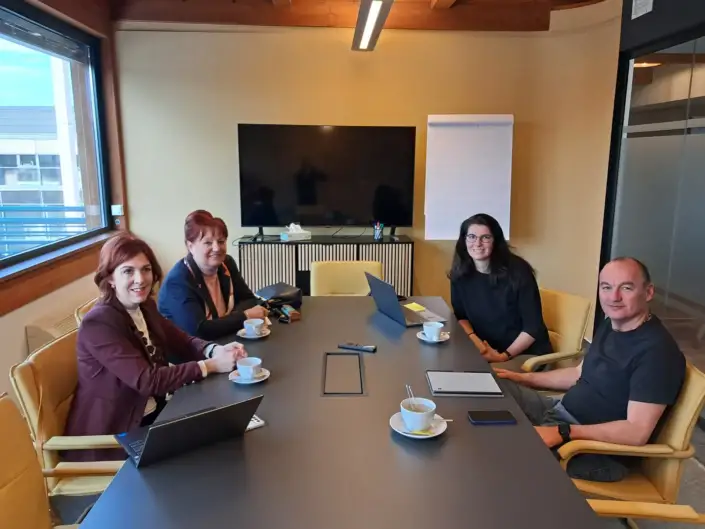
On January 13, 2026, we held a Hungarian-Slovak expert meeting on supporting the cross-border sales of local products produced in ...

Related best practices

PANNONIA GOURMET - EATPANNONIA

PANNONIA GOURMET – EATPANNONIA

In order to promote the gastronomic treasures of the Serbian-Croatian border region, the Pannonia Gourmet project was created, and as ...
INTERNOVAMARKET_FOOD

INTERNOVAMARKET_FOOD

The INTERNOVAMARKET_FOOD project was implemented between 2015 and 2020, in the framework of the Spanish-Portuguese Interreg programme 2014-2020. The initiative ...
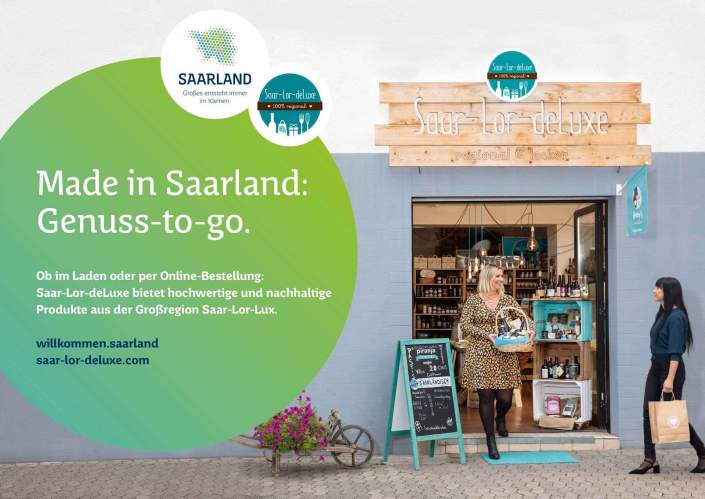
SAAR-LOR-DELUXE

SAAR-LOR-DELUXE

Saar-Lor-Lux brings together local producers and products from the Saar-Lor-Lux region (Saarland, Lorraine, Luxembourg and Rhineland-Palatinate). The shop in Saarbrücken ...