Expert interview with számlázz.hu on e-receipts and compliance for small producers
2026. January 21.

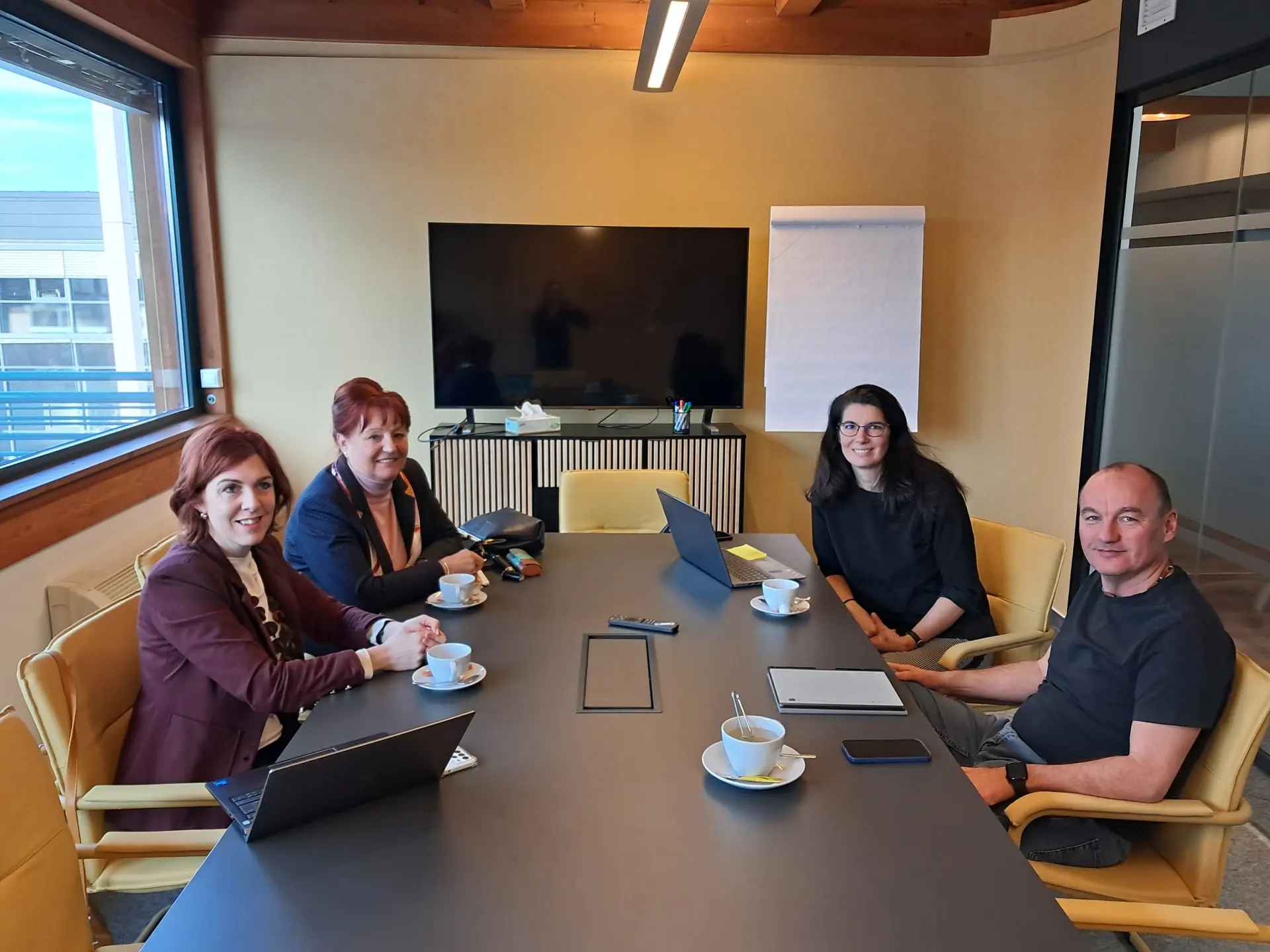
On 21 January 2026, within the #ACCESS project an expert meeting took place at the számlázz.hu office in Graphisoft Park to review documentation and compliance challenges affecting the sale of local agricultural and small-scale producer goods, including cross-border and “pickup point” distribution models. The discussion among Katalin Fekete (legal advisor, CESCI), Ángyán Balázs (CEO, számlázz.hu), Katalin Kujáni (President, Kislépték Association) and Ágnes Czékmánné Kelecsény (President, Nógrád county business community) focused on how digital solutions and regulatory change will reshape everyday sales practices for micro-enterprises and primary producers.
A central topic was the fast-approaching shift toward e-receipt dataregistration and e-receipts. Participants noted that online registration of receipts is expected to become mandatory from September 2026, while the electronic receipt (e-receipt) framework is progressing from voluntary use (from September 2025) toward mandatory implementation (from 2028). The interview examined how cloud-based software cash registers and QR/NFC data exchange could reduce administrative burden while maintaining traceability, particularly relevant for farmers’ markets, agrotourism services, vending solutions, and mixed distribution models.
The consultation also highlighted practical bottlenecks that the #ACCESS project seeks to address through clearer guidance and capacity-building. These included the handling of foreign or cross-border pickup points, the need for faster in-app processes in invoicing systems, and the risk that digital skills gaps – especially among agricultural producers – could become a barrier to lawful operation. Participants therefore emphasised targeted training and information transfer, and reviewed international examples (including French and Italian approaches) as potential reference points when designing workable, legally robust solutions for intermediary and community-based sales formats.
As a next step, stakeholders agreed to continue to explore the technical possibilities and regulatory directions with public authorities, document types (invoice, simplified invoice, receipt, e-receipt), and payment methods that can be applied without jeopardizing producers’ tax status. These exchanges will support the #ACCESS project’s broader aim: improving legal accessibility and practical compliance pathways for small producers and rural businesses operating in cross-border contexts.

The project is financially supported by the European Union,
within the framework of the Interreg Hungary – Slovakia Programme.
For more information visit www.skhu.eu.
The project is financially supported by the European Union,
within the framework of the Interreg Hungary – Slovakia Programme.
For more information visit www.skhu.eu.
 Behind the scenes: report on the latest #ACCESS project partner meeting