Year of publication: 2025

Language: hungarian, slovak, english

Author: CESCI, CESCI Carpathia

Summary report of the reference group workshops

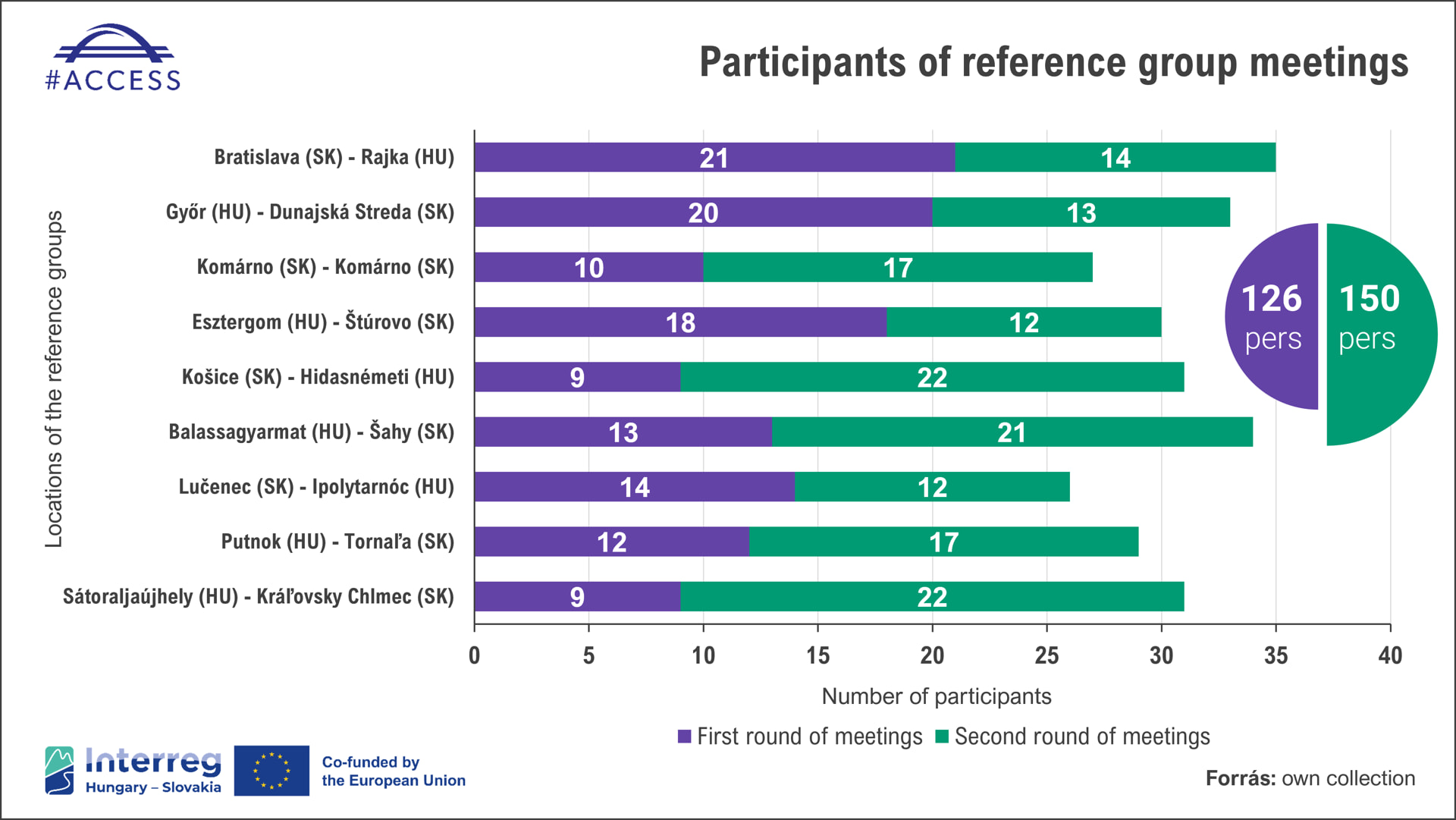
From January 2024, the partners of the #ACCESS project organized reference group workshops on a regional basis in the Slovak-Hungarian border region. A comprehensive report was prepared on the results of the 18 workshop meetings. 

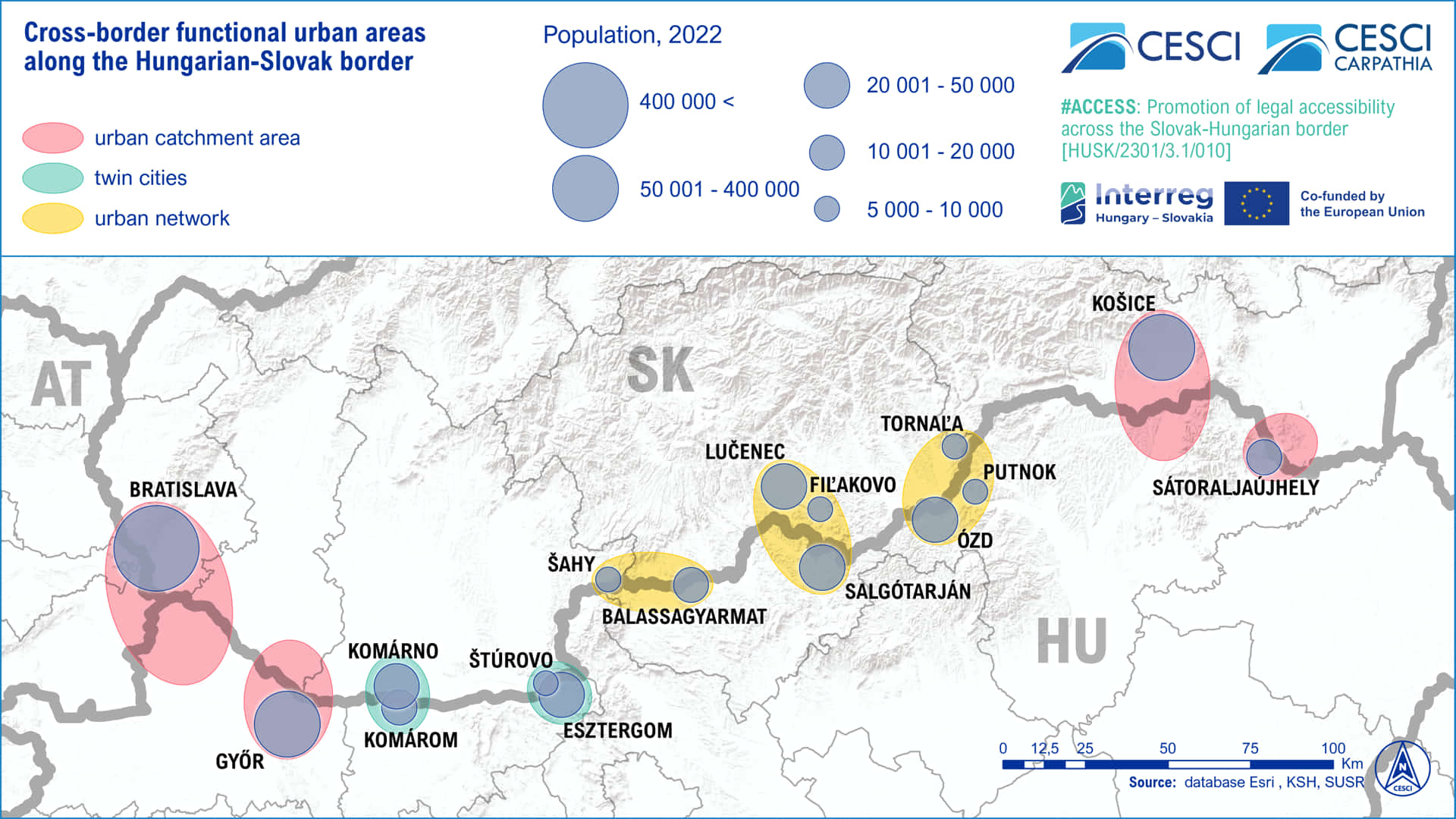
The project identified a total of nine cross-border functional urban areas along the Hungarian-Slovak border, which can be divided into three categories:

cross-border city network areas (Šahy and Balassagyarmat, Salgótarján, Fiľakovo and Lučenec, as well as  Tornaľa, Putnok, and Ózd)

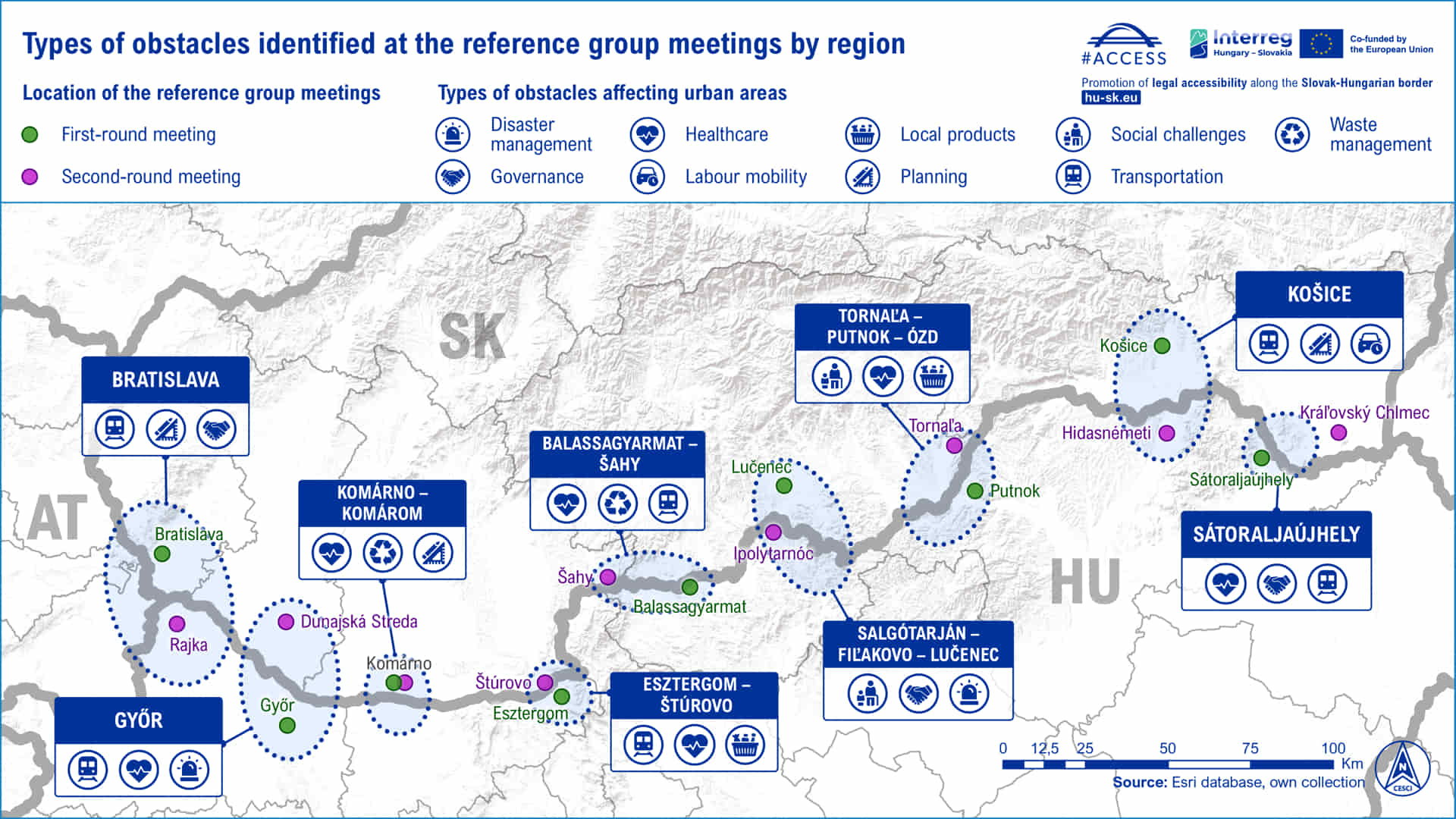
Within the framework of the workshops organized jointly by CESCI and CESCI Carpathia, regional actors had the opportunity to indicate the obstacles and difficulties they experienced in those functional urban areas where they occur most frequently as a result of intensive cross-border movements and interactions. Two workshops were held in each region, using the following methodology:

  • 1.

    Search Search

    In order to identify relevant cross-border obstacles, CESCI experts conducted preliminary research to explore the characteristics and opportunities of each region. The relevant background materials can be found in the downloads section.

  • 2.

    Users Users

    This was followed by meetings that provided an opportunity to initiate a joint discussion on the obstacles arising in the region.

  • 3.

    After the first reference group consultation had taken place in each urban area, the experts visited the areas again to explore the details of the previously identified issues in greater depth and to identify possible solutions.

The participants in the first round of reference groups were the mayors, institutional leaders, and municipal management experts of the respective urban areas. The second round of consultations focused on a topic-specific approach to the local obstacles that had already been identified and on developing proposed solutions. On these occasions, local civil society organizations, experts on the given topic, and the local EGTCs also contributed their insights to understanding and addressing the obstacles. Certain workshops were also attended by members of the Joint Secretariat of the HUSK Interreg program, delegates from national authorities, the Managing Authority, the National Authority, and representatives of the Hungarian Ministry of Public Administration and Regional Development.

Results:

The events provided a structured framework for decision-makers, institutions, and service providers in the affected regions to discuss the obstacles that had arisen and possible solutions. Based on the lessons learned from the reference group meetings, it was possible to identify the types of obstacles that most affected each region.

In several cases, the process of removing obstacles has already begun, or has been raised to a higher level:

  • In the Košice region, the goal is to extend the public transport fare system in eastern Slovakia to cross-border transport services. In order to remove the transport barrier identified in the reference group workshops, CESCI Carpathia asked legal experts from Pavol Jozef Šafárik University to compile a legal analysis of the VAT content of transport fares and wrote to the Slovak Ministry of Transport to discuss the regulatory options at a professional level at a meeting that took place in early September 2025. According to preliminary discussions, Hungarian service providers are open to the initiative.


  • In the Novohrad-Nógrád Geopark region, the process of establishing an EGTC was launched in 2024 on the initiative of the Bükki National Park Directorate with the aim of addressing the issue of joint geopark management. CESCI staff prepared draft versions of the EGTC’s founding documents. These were discussed and finalized during the reference group workshops. The approval and completion process in Hungary and the EU publication procedure could be completed by spring 2026.

  • Based on the lessons learned by the reference groups in the Bratislava metropolitan region, there is a clear need for a governance solution that systematically addresses the numerous challenges and obstacles experienced in the region. The winning bid submitted in response to the call for proposals by the Association of European Border Regions (AEBR) and the French Mission Opérationnelle Transfrontalière (MOT) can be considered a direct result of the reference group workshops. The aim of the bid is to identify the cross-border development tasks of the Bratislava metropolitan area. Within the framework of this Resilient Borders project, CESCI, at the request of the baum_cityregion office, coordinated the organization and implementation of four professional workshops and developed an action plan summarizing governance frameworks and thematic development tasks by the end of August 2025.

  • On the initiative of CESCI, a working group on cross-border health cooperation was set up in 2023 within the Hungarian Ministry of the Interior, whose agenda included, among other things, the topic of the Hungarian-Slovak rescue agreement, which was added as a result of the #ACCESS project. The bilateral agreement could be signed as early as 2025. At the same time, the issue of cross-border outpatient and inpatient care was also discussed. At the reference group workshop in Šahy, representatives of the three hospitals present agreed to apply for funding under the 2025 Hungarian-Slovak Interreg program. In addition, with the involvement of CESCI, the first two consultations between the hospitals in Komárno and Esztergom took place, which also resulted in the intention to submit a joint application. The essence of this would be geographical compensation for care: the hospital in Komárno would accept Hungarian patients on a pilot basis, while the hospital in Esztergom would accept Slovak patients who do not have insurance with Dôvera (the latter can already use the services of the Esztergom hospital). The project would test the technical feasibility of the proposal with a view to submitting a proposal for the establishment of a cross-border healthcare system.
     

Based on the lessons learned by the reference groups, the #ACCESS project works in cooperation with local actors to identify the detailed needs of the region, remove cross-border legal and administrative barriers, and promote joint integrated developments with the aim of facilitating interoperability between the two countries.