Cross-border Emergency Medical Services

The essence of the cross-border obstacle

At the moment, ambulances are not allowed to cross the border and carry out rescue missions. This would be particularly important for people living in cross-border residential areas (Bratislava and the region of Košice), who would then have access to domestic health care. At the same time, many European examples show that it is useful to share sometimes overstretched rescue capacities in border areas.

Briefing of the situation

Both countries signed an agreement with Austria in June 2024 on cooperation in ambulance services. The content of the two agreements is very similar, which opens up the possibility of a similar agreement between the Hungarian and Slovakian sides.

However, there are also noticeable differences between the two countries’ rescue systems. These differences were clarified at the meeting of the two rescue services in Banská Bystrica on 22 January 2025, after which negotiations on a concrete agreement can start.

Emergency services on both sides are open to cooperation. Representatives of the Hungarian Ministry are members of the Cross-border Health Ministry Working Group, in which cooperation in rescue is a regular topic. The signing of the Austrian agreements is another example of the openness of the two governments.

History of the topic

The Slovak Ambulance Service has previously participated in CESCI’s legal accessibility workshops for services in Hungary and neighbouring countries (in 2018 and 2019). The first joint workshop between Austrian, Slovak and Hungarian service providers took place on 13 October 2021, followed by a joint Hungarian-Slovak study tour to Sankt Pölten to learn about the Austrian-Czech model.

These steps laid the foundations for the work launched under #ACCESS. The working group set up in 2024 with the participation of the Ministry of the Interior and its supporting institutions (OMSZ, NEAK, OKFŐ) and representatives of CESCI addressed the issue at both meetings (24 April and 9 October 2024). At the October meeting, both the OMSZ and CESCI were mandated to start negotiations. As a result, the first technical meeting took place on 18 November in Bratislava, in the building of the Slovak Emergency Service Centre, where a presentation of the Slovak and Hungarian rescue systems was made in the presence of Austrian experts. The representatives of the two organisations expressed their willingness to cooperate and decided to organise a workshop in preparation for a future agreement, which took place on 22 January 2025 at the Rescue Service Centre in Banská Bystrica, jointly organised by the Slovak Emergency Service and CESCI Carpathia.

Identified good examples

In many border regions in Europe (e.g. the Benelux, the Meuse-Rhine Eurégion, the Pyrenees and the Alps, etc.), emergency services work together. For the Hungarian-Slovak cooperation, we intend to use the Austro-Czech model launched in 2016, as the agreement there served as the basis for the Austrian-Hungarian and Austrian-Slovak agreements, and can therefore be adapted most quickly and easily, due to the high degree of similarity in content.

Preliminary objectives

At the meeting in Banská Bystrica, the parties presented in detail the structure and functioning of the two countries’ rescue services and clarified the differences between the protocols. The results of the meeting and the two conventions signed last year will allow the drafting of the text of the agreement to begin. It is expected that the draft text will be discussed several times during the year before being approved by the two ministries.

Under favourable conditions, the agreement could be signed in 2026. This will be followed by regional agreements on the coordination of concrete interventions. Legal conditions for the first cross-border deployment could be in place by 2027.

Related news

No posts found.

Related best practices

Health Knowledge Centre in the Upper Rhine Region

Health Knowledge Centre in the Upper Rhine Region

The Upper Rhine region, bordered by three countries, is a deeply integrated border zone in Europe, yet the implementation of ...
EGTC GO (SALUTE-ZDRAVSTVO project)

EGTC GO (SALUTE-ZDRAVSTVO project)

EGTC GO implemented a project aimed at improving patient care within the framework of the 2014-2020 Italian-Slovenian Interreg program. The ...
Meuse-Rhine Euroregion (eGCi - GesundheitsCard international)

Meuse-Rhine Euroregion (eGCi – GesundheitsCard international)

Since 2013, the Meuse-Rhine Euroregion has had a single health card system, which allows for a quick and secure overview ...
Gmünd (Healthacross)

Gmünd (Healthacross)

The Lower Austrian Health Agency is an umbrella organization that encompasses several hospitals and institutions responsible for elderly care. In ...
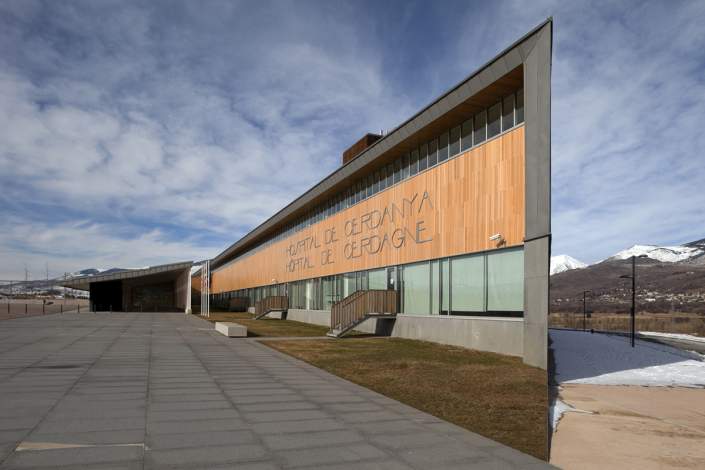
Cerdanya hospital

Cerdanya hospital

Access to hospital care has long been difficult in the Spanish-French border region along the Pyrenees. The problem mainly affected ...
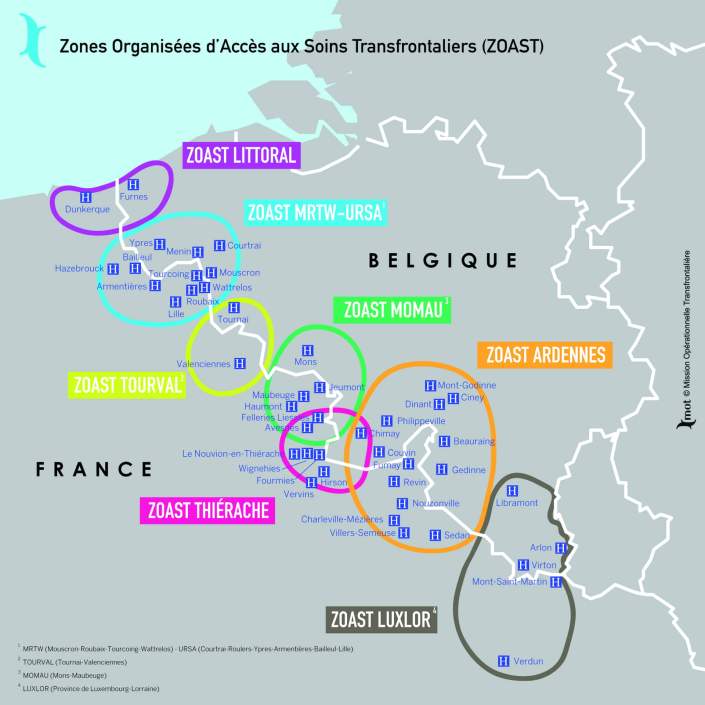
ZOAST

ZOAST

Between 2008 and 2015, seven cross-border health zones were established along the French-Belgian border, within which patients can access healthcare ...