Integrated cross-border public transport system development

The essence of the cross-border obstacle

Partly in connection with the launch of Volvo’s Valaliky plant in 2026, the municipalities of Košice and Prešov districts commissioned IDS Východ to develop a unified public transport and fare system in eastern Slovakia, which will be ready by the end of 2024. The new fare system will cover more than 1 100 municipalities in total, divided into 130 zones, and fares will be based on the number of zones crossed during the journey, regardless of the means of transport used. In addition, a single monthly fare and discount system has been introduced for the whole region.

However, the new system does not apply to the Hungarian side of the border, despite the fact that thousands of Slovak citizens have settled in the border zone over the past decade, a trend that is expected to be reinforced by the Volvo plant.

Public transport connections within the area are currently provided by the Intercity (Hernád/Hornád) Budapest-Miskolc-Košice line, with 6 train pairs per day, and by the bus 802 418 and 802 818 between Košice and Hidasnémeti, which run 13 times on working days. However, the recently introduced fare system cannot be applied on these services, only individual tickets can be purchased, according to the international tariff. A further problem is that although 6 new road border crossings have been built in the area around Košice in the last almost two decades, the vast majority of them have a weight limit of 3.5 tonnes, which does not allow the passage of buses.
Briefing of the situation

A derogation on weight limits for buses would require an intergovernmental agreement. The competent authorities are currently negotiating a draft intergovernmental agreement on border crossings which could include this element. The development of a cross-border tariff system implies at the same time the settlement of VAT rules, the prohibition of cabotage and accounting arrangements. The legislation concerned is partly at EU level and partly at national level, but an agreement between authorities and operators could address the situation.

The authorities are not opposed to negotiations, but the merger of rail and bus companies in Hungary means that it is not currently appropriate to start them.

History of the topic

A delegation from IDS Východ gave a presentation at the workshop in Hidasnémeti, outlining the main obstacles. The workshop was attended by a representative of the Hungarian Institute of Transport Sciences, on behalf of the Hungarian Ministry of Construction and Transport (ÉKM), who outlined the conditions for the development of an integrated system in Hungary.

The CESCI representatives contacted the Ministry of Foreign Affairs and Trade regarding the lifting of the weight restriction.

There will also be a need to harmonise the development plans of the two border counties, as the spatial development plan of the county of Košice, which was drawn up in connection with the establishment of the Volvo plant, does not take into account the Hungarian side in any way (this is not even required by national legislation). In this respect, CESCI approached the Via Carpatia EGTC, which includes the two counties, and thus could provide the framework for harmonising the plans.

Identified good examples

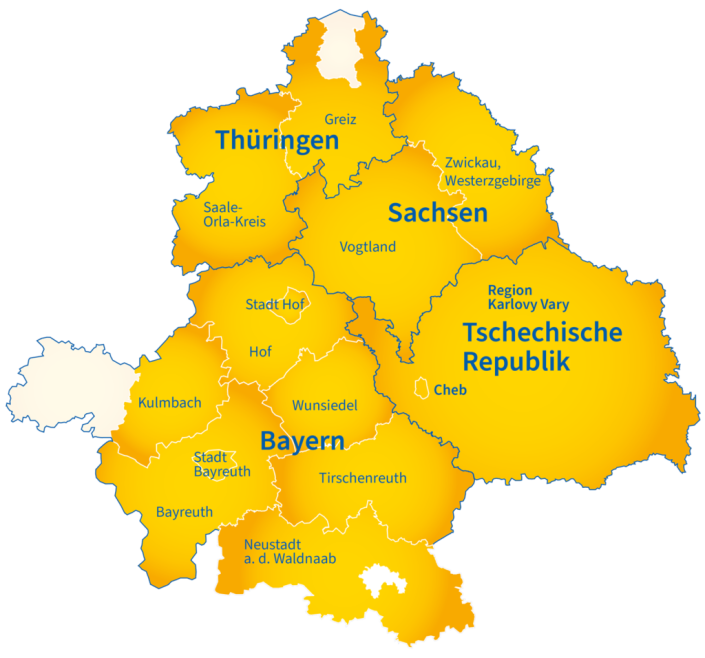
There are cross-border integrated systems, e.g. in the Geneva area, but there is also a separate tariff system for the EGRONet network on the border between the Czech Republic and Germany.

The EgroNet network connects the public transport systems of four regions on the German-Czech border, allowing travel with a single ticket in the historical Czech Republic, Bavaria, Saxony and Thuringia. Based on the principle of territoriality, each authority provides transport services separately, and a working group is responsible for their coordination (e.g. fares, timetables, marketing). EgroNet tickets are valid for buses, trains, trams and local public transport.

Preliminary objectives

The extension of the Slovak system to the Hungarian border region requires intervention in three areas of activity in parallel.

  • Development plans need to be updated in a cross-border manner, as the needs of the Hungarian side were not taken into account in the planning of the transport system. This will require up-to-date information on relocation and labour mobility. The Via Carpatia EGTC could provide a suitable framework for harmonisation activities.
  • The 3.5 tonne weight restriction for buses should be removed as a barrier to cross-border public transport services (an example could be the Mária Valéria bridge between Esztergom and Štúrovo, where the same derogation is in place, mainly for the benefit of commuters from companies located in the Esztergom industrial park). This would first require a needs assessment at local level.
  • The Eastern Slovak tariff system should be introduced for cross-border services, which will require the standardisation of the VAT content of tickets. At the end of 2024 CESCI Carpathia, the Faculty of Law of Pavol Šafárik University commissioned an analysis in this respect. The expert workshop(s) could then be organised with the involvement of the relevant Hungarian and Slovak authorities and service providers.

Related news

No posts found.

Related best practices

Euroregioticket

Euroregioticket

Cross-border public transport with a single ticketing system has existed in the Euregio Meuse-Rhine since 1998. The service, called Euregioticket, ...
Elbe-Labe-Ticket

Elbe-Labe-Ticket

A common cross-border ticketing system was established in the Elbe/Labe Euroregion on the Czech-German border in 2007, mainly to meet ...
Triregio

Triregio

Due to Basel's trinational catchment area, bilateral tickets - Swiss-German - were already established in 1995, while the French side ...
Bodensee Ticket / Lake Constance Ticket

Bodensee Ticket / Lake Constance Ticket

The first unified ticketing system around Lake Constance, the Austrian-German-Swiss border, was introduced in 2002, then called "Day Ticket Euregio ...
EURO-NEISSE-Ticket+

EURO-NEISSE-Ticket+

The Euro-Neisse-Ticket+ system brings together the services of public transport companies in the Czech-Polish-German tri-border area. The ticket system allows ...
Léman Pass

Léman Pass

Cross-border integration of public transport in the Geneva area goes back several decades. In 2019, however, the creation of a ...
EgroNet Tickets

EgroNet Tickets

The EgroNet network connects the public transport systems of four regions on the German-Czech border, allowing one-ticket travel in the ...

Related obstacles

Lack of cross-border public transport links

Reported obstacle

Cross-border public transport options are limited or completely absent (especially regarding Rajka – Mosonmagyaróvár – Bratislava; Salgótarján – Fiľakovo – Rimavská Sobota; Nové Mesto – Sátoraljaújhely; Balassagyarmat – Ipolytarnóc – Lučenec).

Expert answer

This obstacle is not legal, but financial in nature. Any bus or train company can initiate the launch of a cross-border service, for this it only needs to obtain the necessary permission from the transport authority to start the international service on one side, and on the other side it has to request permission to use the relevant stops and stations. Since operating a Rajka – Bratislava bus route, for example, would cost around 250,000 euros, it depends on the financial capacities of the two municipalities whether they start the procurement. At the same time, the Hungarian and Slovak governments can decide to finance the operation of such lines despite the financial losses, primarily citing economic and social interests, for example, as the Slovak Minister of Transport Jozef Ráž recently announced plans to launch a total of 8 cross-border railway lines.