Report on the second meeting of Hungarian-Slovak forest cooperation
17 February 2025


The #ACCESS project in the Hungarian-Slovakian border region aims to improve cross-border mobility, administrative and legal interoperability, and accessibility for both citizens and authorities. During 2024, the project mapped obstacles in the border area through professional interviews, reference groups, questionnaires and an obstacle reporting form open to the public. The forestry sector receives special attention in the analyses, as the ecosystem of Central European forests is in danger due to climate change and human intervention, but can still be saved with well-timed interventions and a common policy. In order to accurately identify and address the problems, within the framework of the #ACCESS project, the project partners organised a Hungarian-Slovak forest meeting on 4 February 2025.
At the second meeting of forestry experts, three main topics were discussed: hunting and game management, sustainable forest management, and beekeeping and bee diseases. In the field of game management, the focus has been on cross-border regulatory challenges, such as the designation and information of hunting areas, the prevention and management of animal diseases and the regulation of the antler trade. Bans on forest visits for hunting in the border area are not always clear, especially if they are communicated differently on both sides of the border. In the case of diseases affecting wildlife, such as African swine fever, cooperation and rapid exchange of information between authorities is essential.
Responsible game management, collective conservation of the stock, or even the case of wounded game crossing the border poses challenges, as the regulation of border crossing with weapons differs from country to country. The experts highlighted that in the framework of responsible game management, it would be necessary to develop a uniform protocol for communication and licensing processes between hunting societies operating in the border region. Similarly, the illegal trade in antlers is a serious problem that requires joint action to tackle it more effectively. Although trade in dead game trophies is subject to authorisation in both Hungary and Slovakia, cross-border control is not yet effective enough.
Suggestions on hunting and game management:
In the area of sustainable forest management, experts stressed the need for cross-border forest protection strategies, in particular with regard to the spread of invasive species and the prevention of forest fires. Sustainable management of forest resources in the border region is key to preserving biodiversity and reducing the effects of climate change. Strengthening joint monitoring systems and information exchange can help to respond to forest threats in a timely manner. Experts highlighted the importance of cooperation between forest management and local communities, which can also contribute to the uptake of sustainable logging practices and the development of ecotourism.
Suggestions for the topic of forestry and sustainable forest management:
With regard to beekeeping, experts focused mainly on the management of cross-border bee diseases and the regulation of colony migration. As bees play a key role in agricultural production and in maintaining biodiversity, the rapid spread of bee diseases can cause significant economic and ecological damage. The meeting highlighted that information exchange between beekeepers, coordination between veterinary authorities and the development of common prevention strategies are essential for effective control. In addition, standardising the certification and control of apiculture products could be an important step to increase the transparency of the honey market.
Suggestions for the topic of beekeeping and bee diseases:
The second expert meeting confirmed that the problems identified in the #ACCESS project are complex, but with appropriate expert cooperation, administrative and regulatory practices, the interoperability of the Hungarian-Slovak border region can be improved in the long term. In the coming years, the project will continue to work on formulating concrete proposals for the development of cross-border cooperation and common regulatory mechanisms, also in the forestry sector.

The project is financially supported by the European Union,
within the framework of the Interreg Hungary – Slovakia Programme.
For more information visit www.skhu.eu.
The project is financially supported by the European Union,
within the framework of the Interreg Hungary – Slovakia Programme.
For more information visit www.skhu.eu.
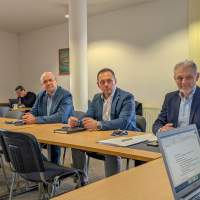 Referencegroup in Štúrovo (closed workshop)