Cross-border application of SIM cards
03 March 2025


In the initial phase of the #ACCESS project, which aims to identify obstacles, CESCI has, among other forums, collected and is collecting information on administrative and legal obstacles encountered by cross-border residents through a Help Desk service.
The lack of information and insufficient information in the border region (made more difficult by bilingualism) is linked to the case of Slovak commuters who cannot apply for a Hungarian telephone number or SIM card from service providers because they do not have a Hungarian address. Our project investigated the extent to which the business policies of telephone companies are discriminatory in terms of European integration and the single market rules ensuring the free movement of services.
CESCI contacted both the telephone operators and the National Media and Infocommunications Authority, who were cooperative in identifying the problem.
In addition to the measures taken by the service providers, the National Media and Infocommunications Authority has not taken initiated proceedings. In the framework of the #ACCESS project, CESCI is paying particular attention to improving the flow of information on economic and social developments in the border region.

The project is financially supported by the European Union,
within the framework of the Interreg Hungary – Slovakia Programme.
For more information visit www.skhu.eu.
The project is financially supported by the European Union,
within the framework of the Interreg Hungary – Slovakia Programme.
For more information visit www.skhu.eu.
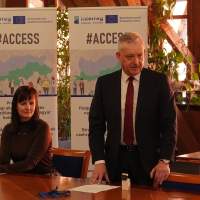
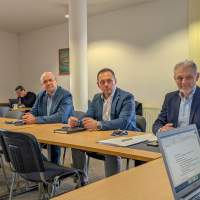 Strengthening cross-border cooperation: insights from the Štúrovo worksho...